
In the quiet corners of small towns and crowded neighborhoods, dreams often whisper instead of shout. For many women, those whispers fade under the weight of duty, silence or lack of opportunity. Yet, when guidance meets courage, even the faintest voice can rise strong.
That is the heart of the Apeksh Foundation — a place where hope meets skill and women learn to turn everyday challenges into lasting change. Through its work in women’s livelihood, health and entrepreneurship, Apeksh has built not just projects, but lifelines. Hundreds of women have found not only income, but dignity.
From Silence to Strength – Apeksh Foundation and the Rise of Empowered Women
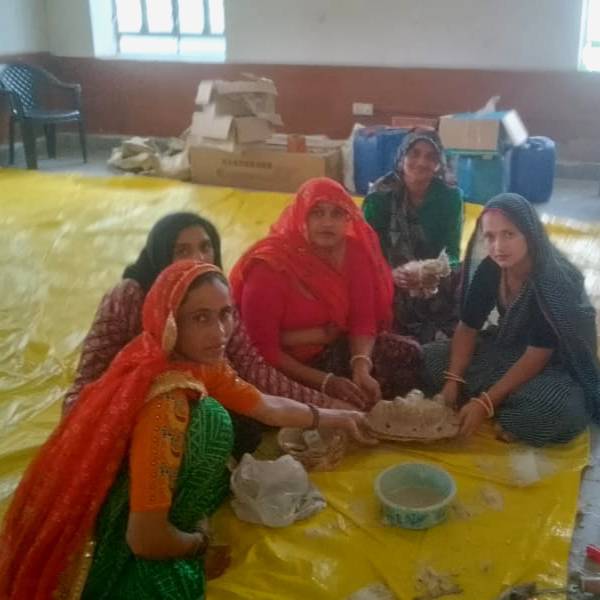
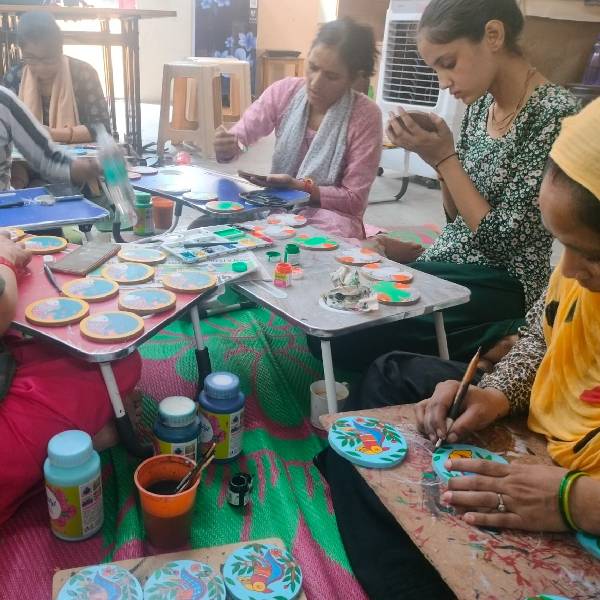
Archana’s story begins in a narrow lane of a small town, where the walls of her home once felt like the walls of her life. Bound by family traditions and financial dependence, she often felt invisible. Yet her hands carried something beautiful — the grace of Madhubani art.
She painted quietly, more for herself than for anyone else, until she met the team from Apeksh Foundation. Through the Women Entrepreneurship and Skill Development Initiative, she received structured training in her art, business guidance and mentoring on how to price, package and promote her creations.
Her first exhibition changed everything. “Apeksh Foundation helped me create my own brand,” she says, her voice steady with pride. “Today I sell my products and support my family.”
From a homemaker to an artisan with a growing customer base, Archana’s art is now finding its way to homes in Europe. Her journey is more than economic — it’s emotional. It’s about a woman rediscovering her worth.
In Jaipur, where opportunity often hides behind economic hardship, Sunita once dreamed of doing something beyond daily chores. She had no formal education or training, only determination.
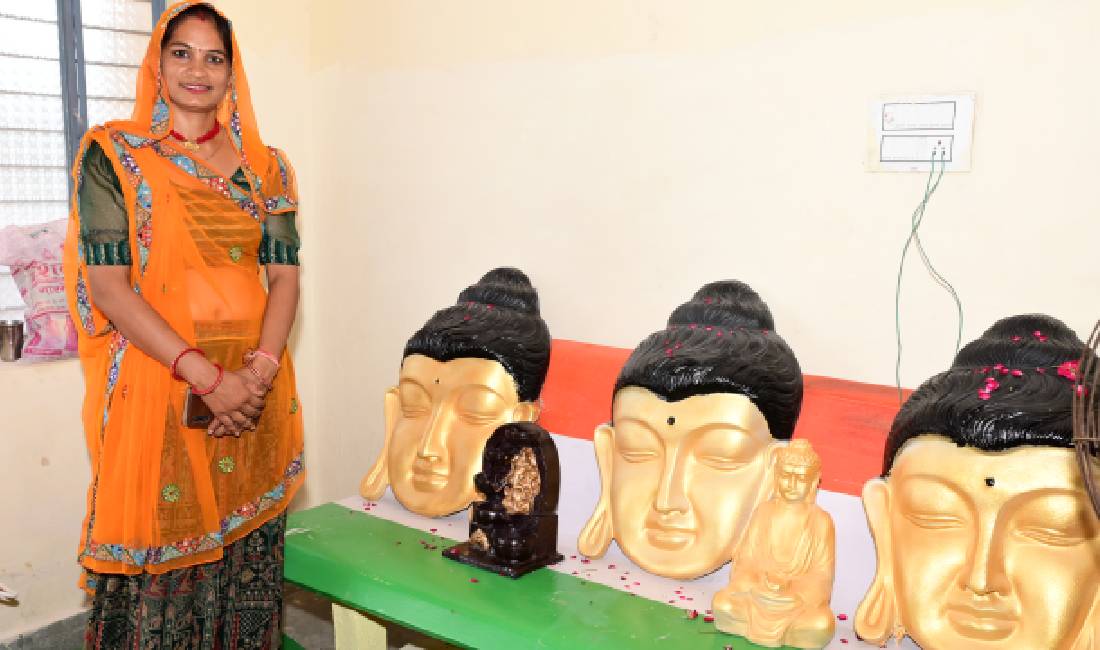
When she joined Apeksh’s Fiber Moulding and Product Design Training Programme, she didn’t just learn a trade; she discovered a sense of control over her future.
“Through Apeksh’s training, I gained the confidence to start my own business,” she says.
Today, Sunita runs a small fiber products workshop. She employs other women like herself — women who once doubted their potential. Her story reflects what Apeksh stands for: vocational training, when done with care and consistency, becomes a bridge to independence.
There are subjects that entire communities avoid, but silence has never solved a problem. Menstrual hygiene remains one such topic, surrounded by myths and discomfort.
In a small semi-urban community, Rekha Sharma was one of many women who believed that “talking about periods” was shameful. That belief started to change the day Apeksh organised a Menstrual Hygiene Awareness and Free Sanitary Pad Distribution Session in her village.
“Earlier, we were hesitant,” Rekha admits. “After attending Apeksh’s session, I understood hygiene and health better. It changed our mindset.”
What seems simple — a conversation, a packet of sanitary pads — became a turning point. It opened doors to health, confidence and dignity. Rekha now encourages other women to attend Apeksh’s sessions. She is not just a beneficiary; she has become a messenger of change.
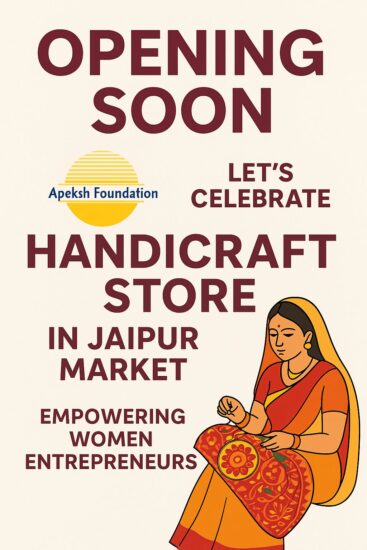
Sometimes, talent blooms unseen. Pooja Singh, a self-taught artisan, spent years creating intricate handmade products from home. Her designs had beauty, but no buyers beyond her neighborhood.
Then came Apeksh’s Handicraft Promotion and Market Linkage Programme, a project aimed at connecting local artists with exhibitions and buyers. With training and exposure, Pooja’s creations began to travel — from her small table at home to craft fairs and city exhibitions.
“I got the chance to showcase and sell my handmade products,” she says, smiling at her small but growing enterprise. “This exposure helped me reach more customers.”
Through Apeksh, Pooja didn’t just sell her work; she learned to value it. She stands today as one of many women proving that economic empowerment and preserving traditional crafts can go hand in hand.
In the outskirts of Noida, Kavita once counted coins before every grocery trip. Her husband’s income was never enough, but there weren’t many jobs available for women in her area
When Apeksh introduced its Stitching and Tailoring Training Programme, she joined quietly, unsure if it would amount to anything. But weeks turned into progress and soon, she was taking neighborhood orders for blouses, curtains and school uniforms.
“Before joining, I had no source of income,” she recalls. “Now I contribute to household expenses. This programme gave me independence.”
For Kavita, a needle and thread became symbols of empowerment. What she earned was more than money — it was respect.
Health education is often overlooked in low-income settlements, where daily survival overshadows self-care. For Rani Kumari, frequent illness and lack of awareness were simply “part of life.”
Apeksh Foundation stepped in with its Health Awareness and Hygiene Kit Distribution Camps, which offered not only hygiene kits but also information about preventive care, nutrition and sanitation.
“Apeksh’s health sessions taught us about personal hygiene and women’s health,” Rani says. “It made a big difference in our daily lives.”
Her words echo a quiet revolution — one where awareness spreads faster than disease and women learn to take charge of their own well-being.
What connects these six women is not just the support they received but the space they were given — a safe place to learn, to fail and to rise again. Apeksh Foundation does not hand out charity; it builds capacity. It listens before it teaches. It believes that empowerment begins when opportunity meets guidance.
Every training workshop, every awareness session, every kit distributed is backed by the belief that real change is personal and community-driven.
When a woman like Archana exports her art or Kavita teaches her daughter to sew, the ripple moves outward — through families, villages and generations.
Empowered women don’t just uplift themselves; they reshape their communities.
Each of these outcomes starts with one act of support — a donation, a training center, a volunteer hour.
Apeksh’s mission continues to grow, but so does the need. Across India, there are still countless women waiting for that one opportunity, that one mentor, that one chance to rise.
Change does not need grand gestures. It needs consistency, compassion and courage — the very qualities that define Apeksh’s work.
By supporting Apeksh Foundation, you are not giving charity; you are investing in women’s empowerment, skill development and community health. You are ensuring that every Archana, Sunita, Rekha, Pooja, Kavita and Rani gets the chance to write her own chapter of hope.
Your donation helps build training centers, fund health camps, provide materials for artisans and organise awareness sessions in areas where knowledge can literally save lives.
One contribution today can spark a chain of change that lasts a lifetime.
Because when women rise, communities thrive.
When confidence replaces silence, societies heal.
And when opportunity meets guidance — empowerment truly begins
Join hands with Apeksh Foundation. Be the voice that helps another woman find hers.