
Ravi lives in a busy Indian city. The air feels heavy, the heat grows each year and green spaces disappear fast. One day he hears about a small patch of land near his home turning into a forest in just a few years. It sounds impossible. But it is true. This is the story of Miyawaki forests. And it is also the story of how you can help build them.
A Forest Born in Japan
Fifty years ago, a Japanese botanist named Akira Miyawaki studied how natural forests grow. He noticed that native plants, when grown together closely, form dense layers. They grow faster because they compete for sunlight. The soil heals itself. Birds, insects and animals return. Miyawaki developed a method to recreate this magic even in small urban or rural plots.
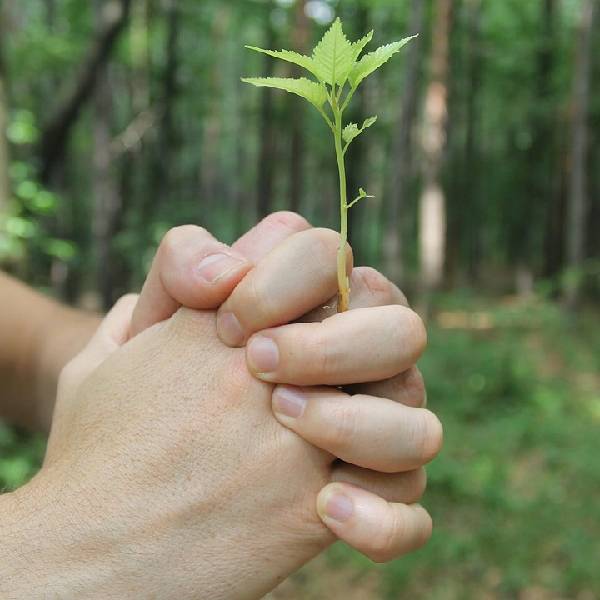
The Miyawaki method is simple. First, the soil is prepared deeply with organic matter. Then, a mix of local native plants is chosen. They are planted close together. Three to four saplings are planted per square metre. The plants include shrubs, mid-sized trees and tall canopy trees. For the first two to three years, they need care—watering, mulching, protection from weeds. After that, the forest looks after itself. No chemicals, no machines. Just nature healing itself.
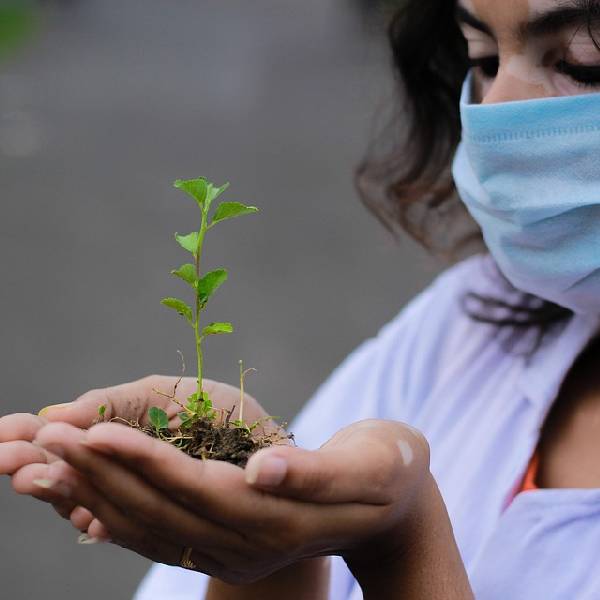
Ordinary plantations plant trees far apart, often of one or two species. They grow slowly, remain weak and rarely support birds or animals. Miyawaki forests are different. They grow 10 times faster. They are 30 times denser. They can host 100 times more biodiversity. In short, it is a land patch filled with hundreds of species—flowers, fruits, herbs, butterflies, birds. All within a few years.
Because the trees are dense and fast-growing, they sequester carbon much more quickly than widely spaced plantation trees. A small forest of 2,500 saplings in Raipur (about 5,000 square feet) planted via Miyawaki absorbed about 30% more carbon dioxide than a typical plantation of similar size. This is why scientists and NGOs call it a game changer.
India has many success stories.
These numbers tell us something powerful: the method works and it works better than most traditional tree planting drives.
The benefits go beyond greenery. Because of dense growth, Miyawaki forests capture carbon dioxide much faster. They fight climate change directly. The soil becomes rich, soft and healthy. It holds more water, reduces floods and prevents erosion. The canopy lowers temperatures and creates a cool microclimate. In cities, this means less dust, cleaner air and relief from heat islands. In rural areas, it means safer farms, stronger soil and more water underground. It is not just about trees. It is about restoring balance.
People often ask about money. Is this method expensive? The answer is no, if we see the long-term value. In rural India, a Miyawaki forest of about 1,200 trees over 500 square metres costs around ₹2,00,000. Most of this goes to saplings. Soil amendments are often sourced locally. With community labour, costs reduce further. For smaller patches, even ₹20,000 can support 100–200 saplings. Each donation, whether small or big, directly translates into living trees and lasting impact.
Many NGOs and groups are already leading. A Bengaluru-based NGO, has already built over 100 Miyawaki forests across 20 cities, planting more than 50,000 trees. In Koppal, Karnataka, a spiritual leader led a project planting 25,000 saplings on 45 acres using this method. In Odisha, city authorities have embraced it to expand green footprints. These efforts show what is possible when people, government and communities work together.
India is losing forests and biodiversity at a worrying speed. Our cities rank among the hottest and most polluted in the world.
So Miyawaki forests are not just “nice to have” — they are essential. Without urgent steps, our children may inherit barren lands, dry rivers and choking air. Planting ordinary trees is not enough. We need methods that work faster, denser and smarter. Miyawaki forests are one such solution. The time to act is now.
Every rupee helps.
Your money does not just vanish into reports. It turns into soil, roots, leaves, shade, birds and carbon storage. It turns into a living forest.
You can also help with time. Join planting drives.
Skeptics may ask—will these forests really last? The answer is in the proof. Survival rates in many Indian states are above 80 to 90%. Growth is visible within one year. Birds and butterflies return quickly. Communities take ownership because the forests give them shade, clean air and even fruits. Native species ensure the plants are suited to the soil and climate. After three years, maintenance is almost zero. That is why this method is cost effective and reliable.
Now let’s imagine Ravi again – this time standing near that once-empty plot. Now, five years later, he walks under tall shade trees. He hears birds. He sees butterflies. Children play nearby. The air feels fresh. It is cooler here than the hot streets outside. The soil smells alive. Ravi smiles. He knows this small forest is protecting his city from heat and floods. He knows it is storing carbon for the planet. And he knows he helped plant it, with a simple donation years ago.
This story can be your story too…this can be your children’s story too, because we all need clean Water and Air to survive. You can be part of the forests that India needs. Each rupee, each hour, each voice matters. Miyawaki forests give us proof that we can heal the land quickly and together. They give us hope that the future can still be green.
Miyawaki forests are not just trees. They are living shields against climate change. They are homes for birds and bees. They are cool lungs for hot cities. They are hope for farmers and families. And they are proof that even small actions add up.
You can make this happen. Support a forest. Plant hope. Leave behind a legacy of green for future generations. The earth is calling. The time is now. Will you answer?